HOA fines in Florida's gated and planned communities can hit $100–$500 per violation, and dumpster placement is one of the most commonly cited issues. If you're managing a renovation project in a neighborhood like Heath Brook Hills or On Top of the World, getting this wrong can cost more than the rental itself.
All Waste Dumpsters has helped Marion County homeowners handle this the right way for over 15 years. Call us at (352) 644-1141 before your project starts and we'll help you avoid the headaches before they happen.
This guide walks you through exactly how to handle HOA approval, where to position your container, and how to protect your driveway surface from damage.
How Much Power Does a Florida HOA Actually Have Over Your Driveway?
Florida HOAs have broad legal authority to regulate how properties look and what sits on them, including temporary containers. Under Florida Statute 720, an association can fine homeowners for violations without a court order, and those fines can compound daily. Most HOA governing documents in Marion County communities include specific rules about:
- How long a dumpster can remain visible from the street (often 48–72 hours max before requiring removal or screening)
- Approved placement zones on your property
- Whether front-yard or street-side placement is prohibited entirely
- Required notice to the board before any container arrives
Don't assume your neighbor got away with it, so you will too. Boards enforce rules inconsistently, and a new property manager can trigger a wave of citations overnight.
Where Should You Place a Dumpster on Your Driveway?
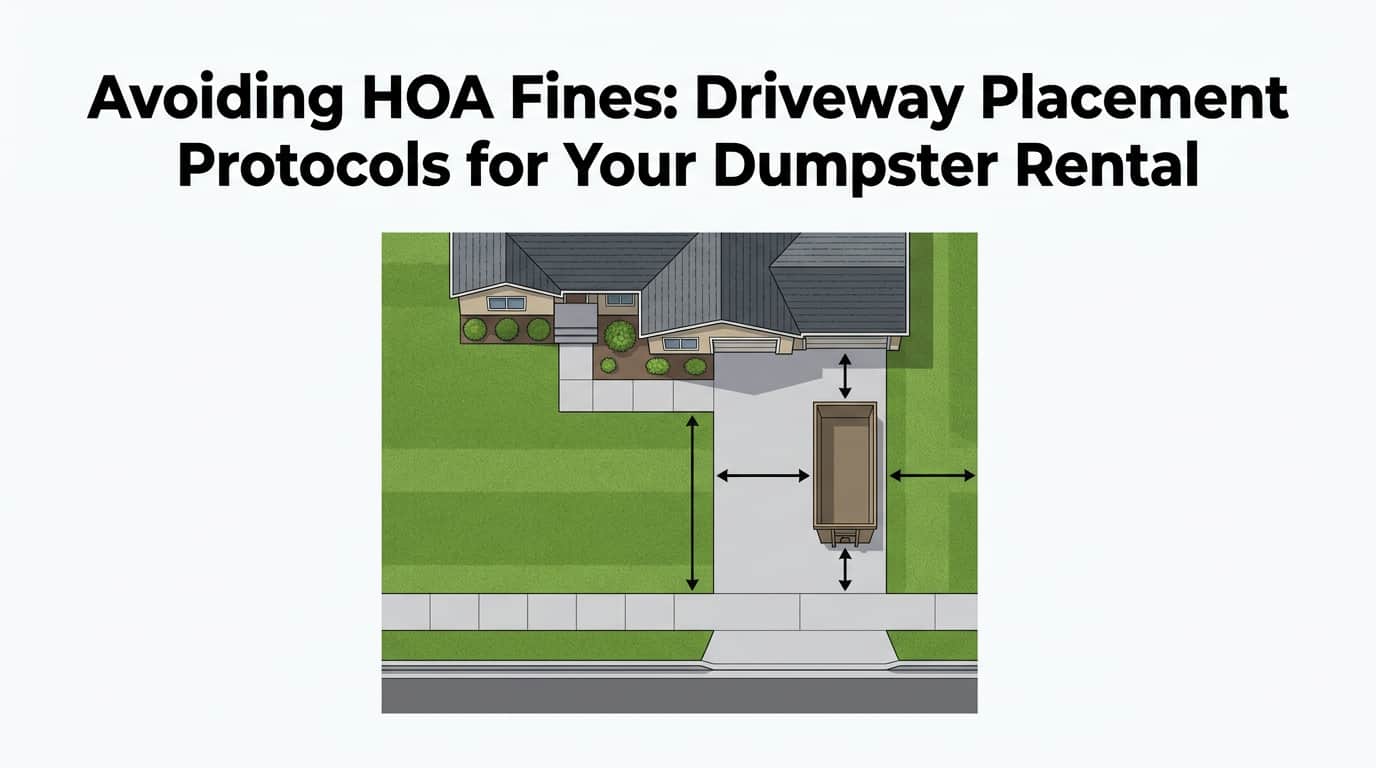
Place your dumpster as far back on the driveway as possible, ideally behind the front plane of your home's facade. This single step addresses the most common HOA concern, which is street visibility. A container parked near the garage door is far less likely to trigger a complaint than one sitting at the curb.
A few additional placement rules that work well across most Ocala-area neighborhoods:
- Side-entry garages (common in Silver Springs Shores and Fore Ranch) offer a natural visual buffer. Use it.
- Avoid blocking sidewalks or fire hydrant clearance zones, which are typically 15 feet.
- Don't place the container over drainage grates or utility access covers. Blocking these can create liability beyond your HOA fine.
Our drivers at All Waste Dumpsters are experienced with tight placements and know how to position a container on your driveway without damaging landscaping or scraping curbs.
Does a Dumpster Damage Your Driveway Surface?
Yes, it can. A fully loaded 10-yard dumpster weighs 6,000–8,000 pounds, and a 20-yard container can top 10 tons when filled with heavy debris like tile or concrete. Concrete driveways typically handle this weight without cracking, but paver driveways and older asphalt are much more vulnerable.
The fix is straightforward: use protective wooden planks or plywood sheets under the container's contact points. Here's why this matters beyond just protecting the surface:
- Paver driveways in neighborhoods like Ocala Preserve can cost $15–$25 per square foot to repair. One cracked section can mean a $500–$2,000 repair bill.
- Planks distribute the container's weight across a wider surface area, reducing point pressure on any single paver or asphalt section.
- They also protect against hydraulic fluid drips and rust staining from the container's steel frame.
Ask your rental company about this before delivery day. Our team at All Waste Dumpsters flags this during the booking process so customers aren't caught off guard.
How Do You Get HOA Approval Before the Dumpster Arrives?
Start the approval process at least 7–10 days before your planned delivery date. Most Florida HOA boards meet once or twice a month, and same-week approvals are rare unless your community has a fast-track process for minor requests.
Here's a practical step-by-step approach:
Step 1: Pull your CC&Rs and look for the relevant section. Search for terms like "temporary structures," "refuse containers," or "construction materials." Most governing documents address this directly.
Step 2: Submit a written request to your property manager. Include the container dimensions, planned placement location (with a simple sketch if helpful), rental start and end dates, and a brief description of the project. Boards respond faster to organized requests.
Step 3: Ask specifically about screening requirements. Some HOAs in Marion County require a temporary fence or privacy screen around any visible container. Budget $75–$150 for a basic screening setup if this applies to your neighborhood.
Step 4: Get written approval. A verbal okay from a board member doesn't protect you. Ask for email confirmation before the dumpster arrives.
Step 5: Know the appeal timeline. If your request is denied, Florida law gives homeowners the right to request a hearing. This process can take 2–3 weeks, so plan accordingly if your project timeline is tight.
Does Florida Have State-Level Rules That Override HOA Restrictions?
Florida law doesn't preempt HOA rules on dumpster placement specifically, but it does protect homeowners in a few meaningful ways. HOAs cannot impose fines without first providing written notice and an opportunity for a hearing. They also can't selectively enforce rules against specific homeowners while ignoring the same violations from others.
If you've received a notice of violation, don't ignore it. Respond in writing within the timeframe stated, typically 30 days, and request the specific rule citation they're relying on. Many first-time violations in Marion County communities are resolved without a fine when homeowners respond promptly and correct the issue.
What Are the Rules in Specific Ocala-Area Communities?
Rules vary significantly from one community to the next. Here's what we've seen across common areas we serve:
Ocala Preserve: Strict aesthetic standards. Front-of-home visibility is typically prohibited. Rear or side-loaded placement with prior board approval is the standard path forward.
On Top of the World: Active enforcement culture. Residents report 48-hour visibility windows before violations are issued. Screening is often required for projects exceeding one day.
Silver Springs Shores: Deed restrictions vary by section. Some areas have no HOA at all, while others carry active covenants. Confirm which section your property falls in before assuming you're unrestricted.
When in doubt, call your property management company directly. A five-minute phone call prevents a $250 fine.
Ready to Schedule Your Dumpster Rental in Ocala, Florida?
Getting HOA approval and protecting your driveway doesn't have to slow your project down. Plan 7–10 days ahead, use protective boards under the container, place it as far back on your driveway as possible, and get written approval before delivery day. Follow those four steps and you'll clear most HOA hurdles without a fine.
When you're ready to book your dumpster rental, All Waste Dumpsters offers same-day delivery throughout Marion County for orders placed before noon. Rentals start at $300 for a 10-yard container, and every quote includes delivery, pickup, and disposal with no hidden fees. Call or text (352) 644-1141 and we'll help you pick the right size, confirm placement logistics, and get your project moving.