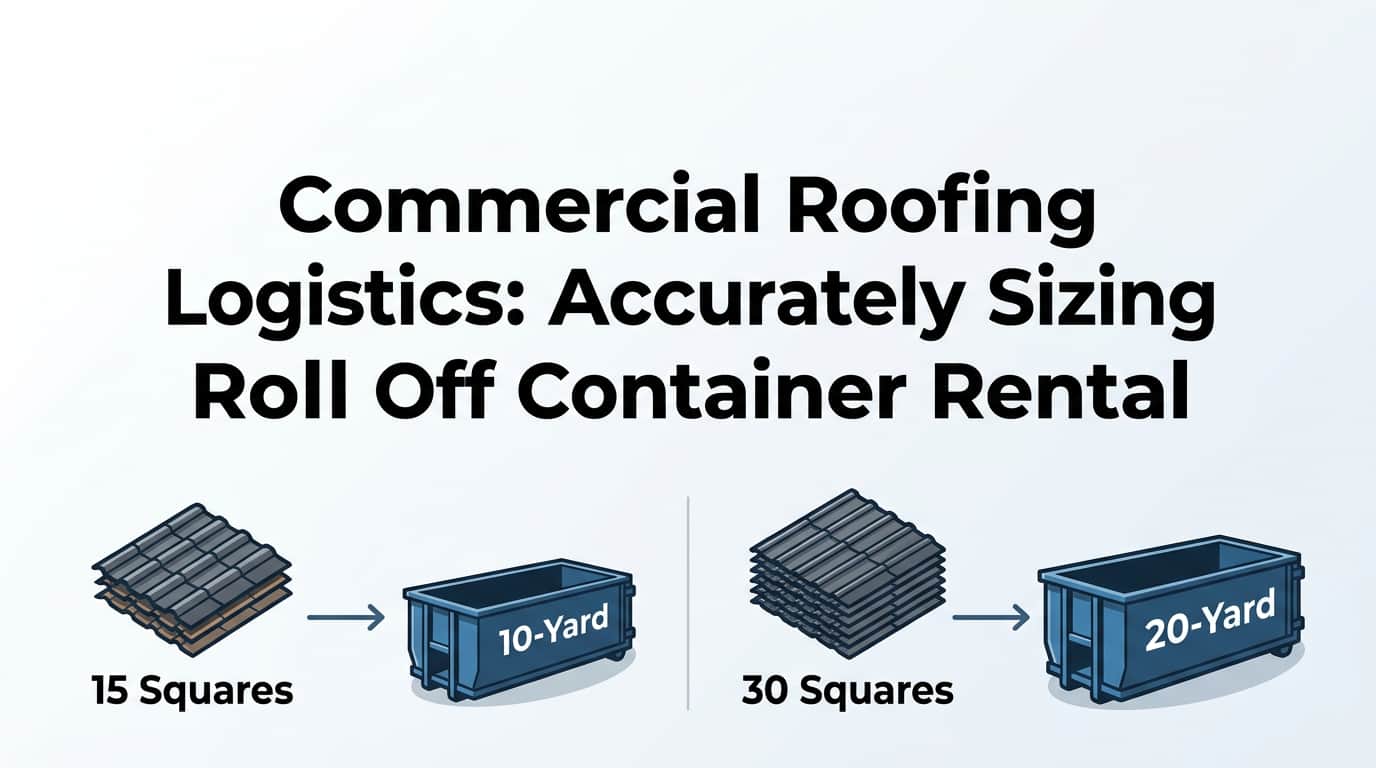
Commercial roofing crews in Ocala, Florida face a problem that residential jobs don't: the debris is heavier, the square footage is larger, and a wrong container size call can stall your whole project. Getting your roll off container rental right the first time keeps your crew moving and your budget intact. Need help sizing a container for your next roofing job? Call All Waste Dumpsters at (352) 644-1141 before your project starts.
This guide covers how Florida roofing materials affect container weight limits, how to calculate what size you actually need, and the local logistics that trip up crews working in the Ocala area.
Why Do Florida Roofing Materials Weigh More Than You Expect?
Florida roofing materials are heavier per square than most national averages suggest, and that weight gap is the most common reason crews end up with overloaded containers.
Standard asphalt shingles weigh roughly 250 to 400 pounds per roofing square (100 sq ft). But commercial properties in Marion County often use materials that push those limits considerably higher. Concrete tile roofing, popular throughout the Ocala area including commercial properties near the Paddock Mall corridor and the SR-200 business district, weighs between 900 and 1,200 pounds per square. That's three to four times the weight of standard shingles. Clay tile runs similarly heavy at 800 to 1,100 pounds per square.
Modified bitumen and built-up roofing (BUR) systems, common on flat commercial roofs, add another layer of complexity. A BUR system with gravel ballast can weigh 600 to 800 pounds per square. Strip off a 5,000 sq ft flat roof and you're looking at 30,000 to 40,000 pounds of debris before you factor in substrate material.
Our team has seen this firsthand: many facility managers ordering containers for the first time underestimate their load by 30 to 50 percent when they don't account for the actual roofing system type. A 20-yard container holds up to 2 tons of standard debris, but that capacity evaporates fast with tile or BUR material.
How Do You Calculate the Right Container Size for a Commercial Roof?
Start with two numbers: your total square footage and your roof pitch. Both directly determine how much material you'll be pulling off.
Step 1: Calculate actual roof area. Your architectural plans should list total square footage, but if you're working from a site visit, measure the building footprint and apply a pitch multiplier. A flat or low-slope roof (common on commercial buildings) uses a multiplier of 1.0 to 1.05. A 4:12 pitch uses 1.054, a 6:12 uses 1.118, and steeper pitches climb higher from there. Multiply your building footprint by the appropriate factor to get your actual roof surface area.
Step 2: Convert to roofing squares. Divide total square footage by 100. A 10,000 sq ft commercial roof equals 100 roofing squares.
Step 3: Apply material weight per square. Multiply your square count by the weight per square for your specific roofing type. A 100-square commercial job with concrete tile could generate up to 120,000 pounds of debris.
Step 4: Match weight to container capacity. All Waste Dumpsters' roll off dumpster rentals in Ocala come in 10, 15, and 20-yard sizes with included weight allowances of 1 ton, 1.5 tons, and 2 tons respectively. Heavy roofing materials will exceed these thresholds on most commercial jobs, which means planning for multiple swaps rather than a single container.
A practical rule: for every 15 to 20 squares of tile roofing, budget for at least one full container swap on a 20-yard unit.
What Permits and Placement Logistics Do Ocala Crews Need to Know?
Container placement on a commercial job site in Marion County isn't just about finding a flat spot. There are real compliance requirements that can slow your project down if you don't address them upfront.
Permit requirements. If the container needs to sit on a public right-of-way or City of Ocala-managed roadway, you'll need a placement permit from the City. Private property placements, including commercial parking lots, generally don't require a permit, but confirm this with your property manager before your container arrives. Some commercial properties near downtown Ocala have access restrictions tied to neighboring easements.
Seasonal weather considerations. Florida's wet season runs June through November, and Marion County gets significant afternoon storms during peak summer months. Roofing debris left in an open container during a heavy rain event adds weight fast. Saturated asphalt shingles can gain 20 to 30 percent in weight. If your project runs into the wet season, consider covering the container with a tarp between shifts or scheduling pickups before debris accumulates overnight.
Surface protection. Parking lots at commercial properties near Silver Springs Shores and the commercial zones along Highway 27 typically have asphalt surfaces that can be damaged by container placement. Ask about board placement under container legs when scheduling your delivery to protect the surface and avoid disputes with property owners.
What Overloading Mistakes Cause the Most Project Delays?
Overloaded containers are one of the most predictable problems on commercial roofing jobs, and they're almost always avoidable.
The most common mistake: loading all material type together. Tile, BUR gravel, and metal flashing have drastically different weights. Mixing them in a single container without tracking running weight means you often hit the weight limit well before you hit the volume limit. By the time the driver arrives and the load is rejected at the scale, you've lost half a day.
The second mistake: waiting for the container to be full before calling for pickup. On heavy commercial materials, a container that looks half-full may already be at or near its weight limit. Schedule swap-outs based on tonnage estimates, not visual fill level.
Third mistake: placing prohibited materials in the container. Items like old HVAC units, refrigerants, and certain adhesives used in commercial roofing systems can't go in a standard roll off container under Florida disposal regulations. Keep a separate staging area for those materials and address disposal separately before the container arrives.
A delayed swap-out on a commercial job in Marion County typically costs a roofing crew 3 to 5 hours of productive time. On a multi-day project, that compounds quickly.
Does Right-Sizing Your Container Rental Actually Save Money?
Yes. Consistently. And the math is straightforward.
Renting a container that's too small leads to multiple unexpected swap-outs, each with its own delivery fee. Ordering one that's too large means you're paying for capacity you never use. On commercial jobs where projects run 5 to 10 days, over-ordering by one size tier can cost an extra $100 to $200 per rental period.
More significant is the cost of overloading. Overage fees at the disposal facility run per ton above the included weight limit. On a tile tear-off job where you exceed the 2-ton limit by 3 additional tons, that's real money added to a project line item that wasn't in your bid.
Budget planning for facility managers becomes much cleaner when container sizing is based on actual material calculations rather than guesswork. For a 50-square commercial shingle job, one 20-yard container with a single planned swap typically runs $500 to $700 in total container costs. The same job done with three unplanned emergency swap-outs can run $900 to $1,100 or higher.
Working with a reliable local provider for your roll off container rental in Ocala, Florida also gives you the option of same-day swap-outs when your timeline accelerates, which matters on jobs where weather windows drive the schedule.
What's the Right Container Strategy for a Large Commercial Roof Tear-Off?
For projects over 50 roofing squares, plan for a multi-container rotation rather than a single-unit rental.
Coordinate your container schedule with your tear-off sequence. Strip one section, fill the container, call for pickup, and have the next container drop before your crew reaches the next section. On large commercial projects near Ocala's industrial parks or retail centers along SW College Road, this rhythm keeps debris moving off the roof and out of your way without stalling the crew.
Work out your daily square footage targets before the job starts and map them against material weight estimates. A 200-square commercial tile job might require 8 to 10 container rotations across a 7 to 10-day project. Knowing that in advance lets you schedule pickups in advance and avoid rush fees or scheduling gaps.
Communicate those container exchange dates to your container provider at booking. A local provider that knows the Ocala area can sequence your deliveries efficiently and respond quickly when a job moves faster than planned.
Ready to Get Your Container Sized Correctly?
Getting the container count and sizing right before a commercial roofing job starts is a budget decision, a scheduling decision, and a compliance decision all at once. The calculations aren't complicated once you know your material type and square footage, but they do require a provider who understands the weight dynamics of commercial Florida roofing materials.
All Waste Dumpsters has been handling roll off container rental in Ocala, Florida for over 15 years, serving commercial and residential crews throughout Marion County. Call (352) 644-1141 to talk through your project details and get accurate container sizing before your next job breaks ground.